Virginia’s drunk driving laws are some of the toughest in the U.S. In 2022 alone, 14,247 Virginia residents were charged with a DUI.1 If you’ve been charged with a DUI or a DWI conviction in Virginia, you might be confused about the difference between the two charges, as well as the penalties of the one you’re about to face.
Some states use the terms DWI and DUI interchangeably, while others consider them completely different charges. Regardless, there are automatic DUI penalties, depending on whether it’s a first or repeat offense and a variety of other factors.
If you’re wondering about the difference between DWI vs. DUI in Virginia and the penalties you might face for each, read on for a breakdown of everything you need to know.
What are the Differences Between a DUI and a DWI in Virginia?
The term DUI refers to “Driving Under the Influence,” while DWI refers to “Driving While Intoxicated.” Since these acronyms are often used interchangeably (but might carry different definitions and consequences depending on the DUI or DWI laws of your state), it can be difficult to keep track of which is which.
Some states might differentiate between DUI and DWI based on whether the driver is of legal age, the driver’s blood alcohol content (BAC), or which substance was used. Other states only use one term or use the two terms interchangeably.2
In Virginia in particular, the terms DUI and DWI are used interchangeably.
While the abbreviated term “DUI” is typically used in Virginia law, three DUI convictions within a ten-year period lead to the conviction of a “DWI felony” (whereas the first and second DUI charges are misdemeanors), and the spelled-out term used is “driving while intoxicated.”3
However, the terms themselves (DUI and DWI) carry the same meaning in Virginia (i.e. if you’re charged with a first-offense Virginia DWI misdemeanor, it’s no different from a first-offense DUI misdemeanor).4 While your DUI or DWI might have different connotations if you were arrested outside state lines, in Virginia, the two charges are synonymous.
Penalties and Consequences
In Virginia, you’re legally considered “driving under the influence” or “operating under the influence” if you’re operating a motor vehicle, boat, or watercraft with a blood alcohol content (BAC) of 0.08% or higher.
Any DUI offense will be reported to the Central Criminal Records Exchange, meaning you might end up with a criminal record because of any DUI arrest, even a DUI in Virginia first-offense misdemeanor.
There’s a chance you might also be legally considered “under the influence” if you’re under the influence of any drug, or if a smaller amount of alcohol impairs you. Because of “buzzed driving” laws, even a BAC of 0.02% is considered an impairment by the National Highway Traffic Safety Administration,5 and in Virginia, it’s also illegal to drive with a DUI suspended or restricted license if your BAC is 0.02% or above.
It’s also important to note that you can even be charged with a DUI or DWI if you have an open container of alcohol inside the passenger area of your car.
Below are the DUI penalties you might face in Virginia, depending on your unique situation and how many times you’ve been charged before.
Consequences of Actions & Circumstances on the Scene
If you’re involved in a motor vehicle accident and a law enforcement officer has probable cause, you can be arrested anywhere, without a warrant, within three hours of the incident.
If you refuse a breath or blood test in Virginia, your license will automatically be revoked for one year. A second refusal is considered a misdemeanor and results in a three-year license suspension. While you may petition the court for a restricted driver’s license thirty days after a first refusal, you may not after a secondary refusal or any subsequent refusals.
If you do submit to a breath or blood test, it’s important to understand the implications of your results3:
- If your BAC is between 0.15% and 0.20% at the time of your arrest, you’ll serve a minimum of five days in jail (a second offense within ten years equates to ten days in jail).
- A BAC of 0.20% or higher means you’ll serve a ten-day jail term (a second offense within ten years equates to a 20-day jail term).
- If you’re under 21 and your BAC is between 0.02% and 0.08%, your license will be suspended for one year, you’ll pay a minimum fine of $500, and you’ll be required to complete at least 50 hours of community service. (Even if you are of legal age, there’s a chance you might be charged with a DUI if your BAC is between 0.02% and 0.08%.)
- If you’re under 21 and drive under the influence of drugs or with a BAC of 0.08% or higher, you’ll be subject to the same penalties as someone of legal age.
- Driving under the influence while transporting a minor (17 or under) results in a mandatory five-day jail term and possible fine. A second offense will result in an 80-hour community service requirement.
Additionally, if you’re caught driving after license suspension for an alcohol-related offense, your vehicle will be immediately impounded or immobilized.
DUI or DWI First Offense Consequences
Your first offense DUI or DWI offense in Virginia will result in3:
- A fine of at least $250
- Driver’s license revocation for one year
- Required attendance at an Alcohol Safety Action Program
- Required installment of an Ignition Interlock Device (a breathalyzer installed in your car that prevents it from starting if you’ve consumed alcohol)
A first-offense DUI charge is considered a misdemeanor in Virginia.
DUI or DWI Second Offense Consequences
Your second DUI or DWI offense in Virginia will result in3:
- A fine of at least $500
- Driver’s license revocation for three years
- A possible jail term of up to one year
A second offense DUI is considered a misdemeanor in Virginia. A second offense within ten years of your first will also result in a mandatory jail term of at least ten days. A second offense within five years carries a mandatory jail term of at least twenty days.
DUI or DWI Third Offense (Felony) Consequences
Is a DUI a felony in Virginia? Your third DUI offense in Virginia is considered a Class 6 felony, and will result in3:
- A fine of at least $1,000
- Indefinite driver’s license revocation
- Prosecution as a Class 6 felony
Three DUI convictions within ten years means a jail term of at least 90 days. You’ll also be forced to forfeit your vehicle if you are its sole owner. If your license was already revoked for a previous DUI charge, your new license revocation period will run consecutively after the initial period.
A third DUI offense in five years means a minimum six-month jail term, while a fourth or subsequent offense will mean a jail term of at least one year.
A third or subsequent DUI charge within five years means you will not be granted bail while waiting for trial.
What to Do If You’re Charged with a DWI or DUI
If you’re charged with a DWI or DUI in Virginia, it’s best to find an attorney as soon as possible to prepare for your trial properly. If you served a jail term, you must search for a lawyer immediately upon your release. You may also need to request a hearing.
The next step will be to make preparations to face your penalties. This might include:
- Getting funds together to pay a fine
- Making alternative arrangements for transportation without your license and/or car
You’ll also need to purchase an Ignition Interlock Device (IID, car breathalyzer) and have it installed.
At this time, you can also make arrangements to attend your required Alcohol Safety Action Program and/or complete required community service hours.
You may petition the court for a restricted license within thirty days of a first-offense breath or blood test refusal charge.
When you read up on Virginia law and prepare yourself to face mandatory consequences, you can stay on top of the process and work towards returning to life as normal more quickly. Empower yourself by acting fast and implementing changes to prevent future charges.
Get Back to Driving Quickly and Conveniently with Smart Start
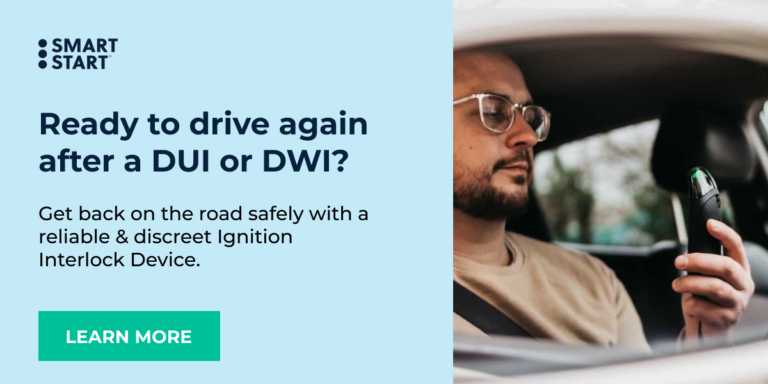
If you’re facing a DUI or DWI charge in Virginia, your Ignition Interlock Device (IID) requirement shouldn’t be a hassle. Smart Start’s easy-to-install, affordable IIDs carry no hidden fees or locked-in contracts. They can also be installed at one of our thousands of conveniently located service centers, and we even offer 24/7 support.
Plus, when you sign up for bi-weekly or monthly auto-payments, you’ll receive $5 off your monthly IID lease payment.
About the size of a smartphone, Smart Start IIDs’ long cords let you move the device freely around the driver’s seat area. Smart Start’s newest FLEXTM Interlock Device’s sleek design is even more discreet and features a simple three-button interface.
If you’re searching for an Ignition Interlock in Virginia, Smart Start has you covered.
Sources:
- Virginia Department of Motor Vehicles. Drinking and Driving. https://www.dmv.virginia.gov/safety/programs/drinking/drinking-driving
- Forbes. DUI Vs. DWI: What’s the Difference? https://www.forbes.com/advisor/legal/dui/dui-vs-dwi/
- Virginia Department of Motor Vehicles. Virginia is TOUGH on drunk and drugged drivers. https://www.dmv.virginia.gov/sites/default/files/forms/dmv168.pdf
- Forbes. Virginia DUI Laws (2023 Guide). https://www.forbes.com/advisor/legal/dui/virginia-dui-laws/
- NHTSA. Buzzed Driving is Drunk Driving. https://www.nhtsa.gov/campaign/buzzed-driving

Uncovering Ignition Interlock Violation Penalties in Washington State
The car’s gassed up, your favorite driving playlist is pumping, and your shades are on. You’re ready to answer the call of the open road. Just one catch: Your ignition isn’t letting you go anywhere until you’ve proven you’re fit to drive.
That’s thanks to your Ignition Interlock Device (IID), a technological safeguard designed to ensure safe roads for all.1
Ever pondered finding a way around the limitations of your IID? Learning about the Ignition Interlock violation penalties Washington State enforces might make you think again.
Typical penalties can range from additional fines to extended IID requirements, all the way to jail time. Here, we’ll unpack the details of these penalties so you can hit the road with your IID while staying compliant with the law.
IID Legal Requirements in Washington
The Evergreen State takes a strong stance on driving offenses involving drugs or alcohol. If you’ve been convicted of DUI, an Ignition Interlock in Washington will likely become a mandatory travel companion on the road to redemption. If you’re wondering, “Is a DUI a felony in Washington?” It’s usually considered a misdemeanor, however, in some cases, other violations such as reckless driving or negligent driving involving drug or alcohol charges, can also result in an IID requirement and a felony charge.1
If the court orders you to get an IID, you’ll need to comply with the following requirements1,2:
Finally, at the end of your IID requirement period, your IID company must submit a certificate of compliance to the Washington Department of Licensing. This document will attest that over the preceding 180 days, you have properly maintained the device, did not attempt to start the motor vehicle with a blood alcohol content (BAC) over 0.04, and did not miss any re-tests required by law.1
IID Requirement Periods
How long will you be required to have an IID? This depends on the specifics of your case, including any previous history of Washington DUI convictions.
In general, you can expect the following sentencing periods1:
These sentencing minimums can be affected by the circumstances surrounding your offense. For example, if you were driving with a passenger under the age of 16 in your motor vehicle, your IID requirement period will be extended.
Common IID Violations
Many IID violations are common sense, but some may be less obvious. Here are the IID violations you need to watch out for:
Penalties for IID Non-Compliance
Violating the terms of an Ignition Interlock Driver License is considered a gross misdemeanor in Washington State. Failing to comply with IID requirements can lead to a cascade of penalties you don’t want to incur, from additional fines to a longer IID requirement period, or even jail time.
Keep in mind that most of the following penalties are mandated by the Washington DUI law. The judge in your case will only have a certain amount of leeway within minimum sentencing requirements, and some minimum penalties can’t be waived, no matter the circumstances.
Penalties can include3:
Compliance Tips for IID Users
If you have an IID, no doubt you want to comply with the rules and requirements that accompany it. After all, violations will result in additional penalties and disruption to your life, and that’s the last thing you want. You’ll be notified by the court of the conditions that come with your IID and the accompanying IIL license. Still, educating yourself on a few tips and tricks for staying compliant is wise.
Following these guidelines will ensure you stay on the right side of the law:
Keep Your Ignition Interlock Device Working Smoothly With Smart Start
Complying with your IID requirements is a crucial part of restoring your standing as a safe driver in the state of Washington. At first, an IID might seem like a big inconvenience, but it doesn’t have to put a crimp in your driving style. Choose an IID that’s compact, discreet, and easy to install and use, and you’ll be done with your IID requirement before you know it.
When you make a Smart Start IID your passenger, you can rest assured that you’ll get fast and accurate readings every time.
Our state-of-the-art breathalyzers use a more sanitary and simple breathing method than other companies’ devices, making it easier to comply with re-test requirements when you’re on the go. With several IID models and pricing plans to choose from, you’re sure to find the right fit for you. And our convenient locations and same-day installation service will have you road-ready in no time.
Sources:
Schedule an Installation
Get a quick and easy IID installation with Smart Start! Get started today!
¡Obtenga una instalación rápida y fácil de IID con Smart Start! ¡Empieza hoy mismo!
"* (required)" indicates required fields
Is a DUI a Felony in North Carolina (NC)?
About a third of all DUI arrests in the U.S. are for a repeat offense, which means they carry the possibility of being considered felonies.1 The difference between a DUI felony and a DUI misdemeanor differs by state, depending on your number of previous offenses within a certain timeframe, as well as other aggravating factors.
If you or a loved one is a North Carolina resident and recently convicted of a DUI, you might be wondering—is a DUI a felony in NC?
Fortunately, a DUI typically isn’t considered a felony in North Carolina unless you’ve surpassed three repeat offenses within ten years. Read on to learn more about the differences between a DWI felony and a DWI misdemeanor in North Carolina, the difference between the terms “DUI” and “DWI” in North Carolina, and the penalties you can expect to face.
DUI vs. DWI
To start, let’s explore the difference between DUI (driving under the influence) and DWI (driving while intoxicated/impaired). Some states use the terms interchangeably, some use one or the other, and some consider the two completely different charges (i.e. a DWI offense might be more serious than a DUI).
Technically, there is no legal difference between a DWI vs. DUI in North Carolina. While DWI is the term typically used in North Carolina law, there is no legal distinction between the two in this state.
NC DWI Penalties
You’ll automatically incur certain penalties when you’re charged with a DWI in North Carolina. These typically include a fine, a jail sentence, and an Ignition Interlock Device requirement (i.e., installing a breathalyzer device that prevents your car from starting if your blood alcohol content exceeds the legal limit).
Below are the baseline NC DWI levels2:
Other factors may affect the severity of your DWI penalties, such as whether you were of legal drinking age at the time, whether a minor was a passenger in your car, and whether you were driving while your license was revoked.
Misdemeanor DWI (DUI)
In North Carolina, a DWI is considered a misdemeanor unless you’re charged with four or more DWIs within ten years, in which case your fourth DWI conviction becomes a felony.2
Your first three DWI charges in North Carolina will carry less severe penalties, but it’s still best to find an attorney and gather funds for legal fees as soon as you can.
Felony DWI (DUI)
In North Carolina, if you’re convicted of four or more DWIs within ten years, your fourth DWI charge becomes a class F felony. Most notably, this means you’ll receive an automatic jail time of at least one year, which cannot be suspended by a judge.3 The maximum sentence is 59 months plus a fine of up to $10,000.
When convicted of a felony DWI in North Carolina, you’ll also have to undergo a substance abuse education program, either while in jail or as a condition of parole.
Additionally, it’s important to note that:
Start Driving Again Sooner with Smart Start
If you or a loved one has been convicted of a DWI in North Carolina, the prospect of facing the penalties may be daunting. Fortunately, Smart Start is here to help you navigate the process and get back on the road sooner.
If you’re in need of an Interlock Device in NC, Smart Start has you covered. Our IIDs are discreet and affordable—they can be purchased with biweekly or monthly payment plans. Plus, when you register for a payment plan with autopay, you’ll receive a $5 discount on your monthly IID lease. They’re also easy to install at one of thousands of conveniently located service centers.
With Smart Start, your Ignition Interlock requirement can be handled smoothly and without breaking the bank. That way, you can focus on getting back on the road. Reach out today to learn more about how we can help.
Sources:
Schedule an Installation
Get a quick and easy IID installation with Smart Start! Get started today!
¡Obtenga una instalación rápida y fácil de IID con Smart Start! ¡Empieza hoy mismo!
"* (required)" indicates required fields
What to Expect out of a Smart Start Kansas Ignition Interlock Program
Do you know what to expect out of your Smart Start Kansas Ignition Interlock program? Just like trying anything new, it can seem a little confusing at first. With a Smart Start Ignition Interlock, you’re taking a Smart Breath™ with the easiest program in Kansas. Remember that you can reach out to the Kansas Department of Revenue for license assistance or status and Smart Start at (800) 831-3299 for any Ignition Interlock questions. We’re here to help you through your program from installation to removal.
Need an Ignition Interlock now? Smart Start offers excellent pricing with same-day or next-day appointments available and dedicated, knowledgeable agents on the Kansas Ignition Interlock law. Schedule your appointment by calling (800) 831-3299 or by filling out our online form.
Let’s go over some general aspects of the beginning, middle and end of your Ignition Interlock Device program.
Installing the Smart Start Kansas Ignition Interlock Device
When you are eligible to install an Ignition Interlock Device in Kansas, call Smart Start at (800) 831-3299 or fill out our online form. You’ll receive your quote, your nearest service center location and we’ll confirm the date and time of your installation appointment.
Make sure to bring the following items to your appointment:
At the service center, our technicians will install the Smart Start Ignition Interlock into your vehicle in no time so you can get on with your day. While they are installing the device, we’ll ask you to sign some paperwork, watch a training video and test with the Ignition Interlock to ensure you’re comfortable with the tests. You can also ask our dedicated team any questions you may have… we are happy to answer them!
Now let’s move on to what you’ll be expecting during your program.
During Your Smart Start Kansas Ignition Interlock Device Program
You may already know that you have random running retests after your initial test to start the vehicle. These random running retests ensure you are not drinking and driving during your trip. Remember to pull over safely and rinse your mouth with water before taking random running retests. In Kansas, you’ll have up to five minutes to complete your test.
You will also need to visit a Smart Start service center every 30 days for your calibration appointment. Your calibration appointments are mandatory and are important to your success in the Ignition Interlock program. Don’t worry though! Smart Start calibration services last only a few minutes and then you’re on your way!
Completing the Smart Start Ignition Interlock Device Program
Finally, we come to the end of your Smart Start Ignition Interlock program. You should have a good idea of when you’re removing your Ignition Interlock, but if you don’t, you can reach out to the Kansas DOR’s Driver Solutions division at 785-296-3671 or check your driver’s license status online. Once you have confirmed your eligible removal date, schedule your removal appointment with Smart Start. When you arrive at your removal appointment, our friendly technicians will remove the Ignition Interlock within minutes.
And that’s it! Remember that you can always call Smart Start for any questions about your Smart Start Kansas Ignition Interlock program.
Get Back on the Road with a Smart Start Ignition Interlock
Ready to install your Ignition Interlock Device? Schedule your installation appointment today by calling (800) 831-3299 or by filling out our online form.
Schedule an Installation
Get a quick and easy IID installation with Smart Start! Get started today!
¡Obtenga una instalación rápida y fácil de IID con Smart Start! ¡Empieza hoy mismo!
"* (required)" indicates required fields
What’s Up with False Positives on Ignition Interlocks?
If you’re new to the Ignition Interlock program, you may have a lot of questions on your mind. One of those questions can relate to some everyday items we use or ingest, such as mouthwash or vanilla extract, and how a false positive can occur with an Ignition Interlock. Why? Because these items contain alcohol properties, such as ethanol or menthol. In fact, vanilla extract can contain between 35 to 40 percent alcohol.
With Ignition Interlocks, some have mistakenly coined this situation as a false positive when someone ingests one of these items, tests with their Ignition Interlock and receives a positive alcohol reading. Read on to learn more about the false positive myth with Ignition Interlock Devices.
Or are you ready to get back on the road with a reliable Ignition Interlock? Smart Start can help as the largest provider in the world with many service locations, excellent pricing and friendly customer service. Give us a call at (800) 831-3299 or fill out our online form to schedule your installation appointment and receive a quote.
Now let’s go over the Ignition Interlock, how it functions and why using the term false positive is misleading for Interlocks.
Busting the Myth of False Positives on Ignition Interlocks
One myth to bust is the term false positive on Ignition Interlocks. State-certified Ignition Interlocks contain alcohol-specific, fuel cell technology that measures your breath alcohol concentration or BrAC. The device will not know the difference between vanilla extract or a beer for example, but both contain alcohol.
If you are ingesting any items with alcohol properties, keep this tip in mind with your Ignition Interlock tests. Rinse your mouth with water before taking each of your breath tests. The water will help dissipate any alcohol properties in your everyday items that are in your system quickly.
In addition, if you are a Smart Start Ignition Interlock client, our friendly Customer Care Center can help you and clarify any aspects of your program so you can succeed and meet your requirements easily. If you’re unsure about any items you’re ingesting or any other questions, just call our team of Interlock experts at (800) 831-3299.
Need an Ignition Interlock now? Take a Smart Breath™ and choose Smart Start! We can schedule same-day or next-day installation appointments for your convenience. Schedule your installation by calling (800) 831-3299 or by filling out our online form.
Schedule an Installation
Get a quick and easy IID installation with Smart Start! Get started today!
¡Obtenga una instalación rápida y fácil de IID con Smart Start! ¡Empieza hoy mismo!
"* (required)" indicates required fields
What to Expect After a 2nd DUI in Colorado
Getting a DUI can be a highly stressful experience, especially if it’s not your first offense. This is because the DUI penalties can be more severe if you already have a record, and you may not know what to expect.
If you’re facing a second DUI in Colorado specifically, you can prepare yourself by reviewing the Colorado DUI laws. You may already have some background knowledge from overcoming your first DUI, but researching the implications of a second DUI can help you navigate the process even better and ensure you get the right advice for your unique situation.
Fortunately, we’re here to help. Below, we break down everything you need to know about getting a second DUI in Colorado.
Legal Implications of a 2nd DUI Colorado
If you already have one DUI, you likely know that your first DUI in Colorado is a misdemeanor. However, you may not know that your second DUI is also a misdemeanor, not a felony.
In fact, in Colorado, your first three DUI charges are all typically misdemeanors. Although each subsequent DUI will have more intense penalties, they’ll still count as misdemeanors on your record. So, when is a DUI a felony in Colorado?
If you end up getting a fourth DUI, it will count as a class 4 felony. It’s important to note that if you seriously injure someone else while driving under the influence, your DUI could also come with a vehicular assault charge, which is also a felony.
Understanding DUIs and DWAIs in Colorado
Colorado has multiple types of DUI charges that cover different instances of impaired driving. Understanding each category can help clear up any confusion about what counts as a second DUI. Colorado’s main categories are:
Any charge involving driving under the influence can stack up over time. This means that if you get a DWAI and then a DUI, you would still be subject to the penalties for a second DUI. Even though first-time DWAIs have lower penalties than first-time DUIs, a second-time DWAI will also be treated the same as a second-time DUI.
Penalties for a Second DUI in Colorado
Getting a DUI can involve having your license revoked, serving jail time, paying fines, and completing community service. You’ll likely have to face more severe versions of those penalties for your second DUI. For example, your first DUI can come with up to $1,000 in fines, while your second DUI may involve up to $1,500 in fines.
A second DUI charge also typically comes with mandatory jail time. Although some people serve jail time for their first DUI, others can avoid a jail sentence altogether. Once you incur a second DUI, the law requires most people to spend a minimum of 10 days in jail.
Here’s a full breakdown of the legal penalties you can expect from your second DUI in Colorado:
The timing of your second DUI offense can also impact the severity of your penalties. For instance, if your first DUI occurred more than five years ago, you may get a more lenient sentence when it comes to jail time. Although Colorado doesn’t have an official lookback period—or a period of time after which your second DUI is treated like a first offense—judges may offer options like house arrest if it’s been five or more years since your last DUI.1
Probation and Monitoring
Second-time DUIs also come with probation requirements. Once convicted, you’ll be required to complete two to four years of supervised probation.2 If you need to serve jail time, you’ll start probation once you complete your sentence.
Typically, probation involves regular alcohol monitoring, meaning you’ll take regular tests to prove that you haven’t been drinking.3 You’ll also have regular meetings with your probation officer to discuss your progress and demonstrate that you’ve been abiding by the law. You may also be required to complete a drug and alcohol treatment program or attend classes about substance abuse.
While on probation, avoiding any issues with the law is critical. Committing even minor crimes violates your probation and could lead to serious legal DUI penalties, along with an extension of your probation. The following can also count as a probation violation:
Additionally, during your probationary period, you’ll be required to install an IID in your vehicle to regain your driving privileges. You typically need to have your IID in place for two years for a second DUI conviction. The IID will test your BAC each time you want to start your car, and will only allow you to drive if your results show that you’re sober.
If you try to drive while intoxicated, the car won’t start, and the IID will create a record of your attempts. The court will closely monitor your IID reports to determine if they need to extend your probationary period.
Do DUIs in a Different State Count?
If you were convicted of your first DUI in a different state, the state of Colorado will still have access to your criminal record. Plus, most states participate in the Interstate Driver’s License Compact, which means that they handle DUI and traffic offenses from other states as if they occurred in-state.4
Put simply, your DUI history will essentially transfer over, and Colorado will consider your prior convictions when assessing your second DUI.
Tips for handling Your Second DUI
Whether you’re facing a second DUI charge or have already been convicted, it’s important to be proactive. The way you handle your DUI can have a significant impact on your ability to move past it and eventually regain your full driving privileges.
Here are several tips to help guide you through the process:
Work With an Experienced Lawyer
The penalties for a second DUI can vary. Hiring a lawyer with experience in DUI charges can help you work towards a lighter sentence. Reach out to your DUI lawyer when you have questions, and follow their advice at all times.
Complete All Probation Requirements
Make sure you thoroughly understand all the details of your probation and follow them to the letter. This means:
Follow Traffic Laws Carefully
If you already have multiple DUIs, your main goal should be to avoid future legal trouble. Start by ensuring that your car’s registration is up-to-date and practicing defensive driving when you’re behind the wheel. Even small traffic infractions have the potential to interfere with your probation, so be proactive about driving safely.
Practice Sober Driving
Driving after a second DUI offense involves having an IID in your car to monitor your sobriety. The device will flag any attempts to drive while under the influence, and the court could use those attempts to extend your probationary period.
So, make sure you’re fully sober each time you use your IID to start your car.
Assess Your Relationship With Alcohol
Getting a DUI conviction is an opportunity to evaluate your relationship with drugs and alcohol. Consider using your second DUI as motivation to make better choices in the future when it comes to drinking and driving. Take your alcohol education program to heart and start building a sober support network to help you stay focused while on probation.
Overcome Your DUI Successfully With Smart Start
Getting an IID installed in your vehicle is one of the first steps you can take to move on from your second DUI conviction. Once you have your car breathalyzer in place, you can practice safe driving habits and start waiting out your IID requirement period.
Even better? Smart Start IIDs can help keep you on track while fulfilling your court-mandated requirements. They’re easy to install and come with 24/7 support from knowledgeable technicians who will have your back throughout every step of the process. Check out our available Ignition Interlock Devices today, and reach out when you’re ready to learn more.
Sources:
Schedule an Installation
Get a quick and easy IID installation with Smart Start! Get started today!
¡Obtenga una instalación rápida y fácil de IID con Smart Start! ¡Empieza hoy mismo!
"* (required)" indicates required fields
First Offense DUI in Virginia: What to Expect
Virginia is notoriously tough on drunk, drugged, and “buzzed” drivers. If you’re a Virginia resident going through your first DUI case, you’re likely wondering what comes next.
Fortunately, a first offense typically isn’t as bad as a second or third offense—and we’re here to help you navigate it.
Read on for our expert guide on what you can expect after your first DUI in Virginia, from penalties and fines to installing a car breathalyzer.
What is a DUI?
To better understand DUI Virginia—first offense and beyond—it’s helpful to first understand DUIs in general. DUI stands for “driving under the influence,” and it’s a criminal charge in all 50 U.S. states.1What about a DWI vs. DUI in Virginia? DUI is used interchangeably with DWI, or “driving while intoxicated/impaired.”
You’re legally intoxicated if your blood alcohol content (BAC) is 0.08% or above (per a breath or blood test). However, you may still be charged for drunk driving if your BAC is as low as 0.02% (especially with a suspended or restricted license).2
Is a DUI a felony in Virginia? Sometimes. If you’re charged with a DUI in Virginia, you’re subject to prosecution for a misdemeanor, unless it’s your third offense (in which case you’ll be charged with a class 6 felony DUI).
Difference Between a DUI and Driving with a 0.02% BAC
A 0.08% BAC is the federal legal limit to be considered intoxicated. If you’re operating a motor vehicle, boat, or watercraft in Virginia with a BAC of 0.08% or above, you’re considered legally “under the influence,” and will be charged with a DUI if pulled over.
Driving with a blood alcohol level of at least 0.02% is considered driving “buzzed.” You might still be charged if pulled over while legally “buzzed,” and will get a DUI charge if driving while “buzzed” with a restricted or DUI-suspended driver’s license.
Legal Process After a DUI Arrest
After your DUI arrest, you’ll be faced with the following first-time DUI penalties in Virginia2:
Even if you refuse a breath or blood test when you’re pulled over, your driver’s license will still be revoked for one year. After thirty days, you’ll be able to petition the court for a restricted driver’s license (after your first prior offense DUI only).
You may also be charged with a DUI if there’s an open container of alcohol anywhere in the passenger area of your car (including the glove compartment).
If you’re involved in a car accident and a law enforcement officer has probable cause (even if there’s no concrete evidence you were drinking), you can be charged with a DUI and arrested at any location, without a warrant, within three hours of the crash.
If you’re under 21, a first-time offense DUI for “buzzed” driving (0.02%-0.08% BAC) will result in the revocation of your license for a year, a fine of at least $500, and 50 hours of community service. Otherwise (if your BAC is 0.08% or above), you’ll receive the same penalties as someone of legal age.
According to Virginia DUI laws, if your BAC is between 0.15% and 0.20% at the time of your first offense, you’ll serve a mandatory, minimum five-day jail term. If your blood alcohol level exceeds 0.20% at the time of your first offense, you’ll receive a mandatory, minimum ten-day jail term.
After your arrest and any jail time, you’ll want to search for a DUI attorney who can help you through your case. You may also need to request a bond hearing to determine whether you can post a bond (as well as the amount that must be paid).
Ignition Interlock and SR-22 Insurance
After your first DUI offense in Virginia, you’ll also be required to purchase and install an Ignition Interlock Device (IID), which won’t allow your car to start until you pass a breathalyzer test. You may also need to purchase an SR-22 insurance policy to have your license reinstated.
An SR-22 acts as a certificate of financial responsibility presented to your state. It ensures that your auto insurance policy meets the minimum required liability coverage after:
Get Past Your First DUI Faster with Smart Start
If you’re handling your first DUI case and need an Ignition Interlock in Virginia, Smart Start makes the process easy. Our sleek, discreetly-sized ignition interlock devices can be quickly installed at one of thousands of convenient service locations, and we also offer 24/7 support.
Plus, our IIDs are affordable and can be paid for with a bi-weekly or monthly payment plan. When you sign up for a plan with auto-pay, you’ll even get $5 off your monthly IID lease.
With a Smart Start ignition interlock device, you’ll have one less thing to worry about, ensuring the road ahead is smooth.
Sources:
Schedule an Installation
Get a quick and easy IID installation with Smart Start! Get started today!
¡Obtenga una instalación rápida y fácil de IID con Smart Start! ¡Empieza hoy mismo!
"* (required)" indicates required fields
Is a DUI a Felony in Colorado?
Most people know that getting charged with a DUI is serious, but they may not understand the actual legal implications. This is likely due to the fact that each state has its own guidelines for handling DUIs, including their penalties and whether they count as misdemeanors or felonies.
If you’re facing a DUI in the Centennial State, you may be wondering, is a DUI a felony in Colorado?
In the state of Colorado, a DUI can be a felony or a misdemeanor, depending on the circumstances. You can identify which charge applies to your situation by exploring different scenarios and adequately preparing for the journey ahead. In this article, we break down when a DUI becomes a felony in Colorado and explore the penalties for different types of DUIs.
Understanding DUIs in Colorado
Before you determine if your Colorado DUI charge is a felony or a misdemeanor, it’s helpful to have a basic understanding of Colorado’s DUI system. Colorado has three different types of impaired driving charges1:
All of these charges are misdemeanors for your first offense. If you accrue multiple subsequent charges, however, the charges could eventually be upgraded to felony status.
Is DUI a Felony in CO?
In some cases, a DUI can be a felony in the state of Colorado. However, misdemeanor DUIs are more common. The legal status of your DUI depends on the severity of your situation and your criminal history.
So, what is a felony DUI in Colorado?
A DUI becomes a felony after your third DUI conviction. That means that your first three DUIs will be misdemeanors, but your 4th DUI will be a class 4 felony charge. You can also get a felony DUI if someone was killed or seriously injured because of your Colorado DUI incident. In these cases, you may be subject to more serious charges like vehicular assault, which is also a class 4 felony, or even vehicular homicide, which is a class 3 felony.
Legal Consequences of Misdemeanor vs. Felony DUIs in Colorado
Each Colorado DUI conviction you get will come with increasingly serious consequences. For example, you may not serve jail time for your first DUI, and may get a restricted license in Colorado instead. However, you’ll likely spend time in jail for your 2nd DUI in Colorado. Once you reach your third DUI, you’ll probably pay higher fines and have a longer jail sentence, even though it’s still a misdemeanor charge.
Here’s a breakdown of the DUI penalties based on your number of DUI offenses2:
First DUI or DWAI (Misdemeanor)
DUI and DWAI penalties vary slightly for your first offense. For a DWAI, you can face these consequences:
For your first DUI, you can expect:
Second DUI (Misdemeanor)
If you get a second DUI case or DWAI, you could face:
Third DUI (Misdemeanor)
The main difference between your third and second DUI case is the jail term, as the mandatory minimum sentence jumps from 10 days to 60 days even though it’s still a misdemeanor. Here’s a full breakdown of the consequences:
Fourth DUI (Felony)
Your fourth DUI automatically becomes a felony DUI charge. You can face two to six years of prison, three years of parole, and thousands of dollars in fines.
Get Back to Driving After a DUI With Smart Start
In Colorado, both a misdemeanor DUI offense and a felony DUI charge will require you to install an Ignition Interlock in Colorado into your vehicle for a certain amount of time if you plan on driving after your DUI. To get back on the road faster, consider working with Smart Start to quickly, conveniently, and affordably secure an IID for your vehicle.
At Smart Start, we’re committed to providing our customers with easy-to-use, accurate car breathalyzers so they can successfully fulfill Colorado’s Ignition Interlock requirements. Kickstart your installation process by reaching out to us today.
Sources:
Schedule an Installation
Get a quick and easy IID installation with Smart Start! Get started today!
¡Obtenga una instalación rápida y fácil de IID con Smart Start! ¡Empieza hoy mismo!
"* (required)" indicates required fields
Driving with a Restricted License in Colorado: What You Need to Know
If you’ve been convicted of a DUI or have other driving-related infractions, you may still be able to drive—with some restrictions. Understanding the rules of any restrictions on your license is critical to regaining the right to drive without limitations. Plus, following the rules of your restricted license gives you the opportunity to show that you can drive responsibly while waiting for the full reinstatement of your license.
In Colorado, the restrictions related to a DUI are different than other restricted licenses. If you’re confused about how to handle your restricted license in Colorado, check out this helpful guide. In it, we explain the difference between a DUI restricted license and a standard restricted license, then break down the details of complying with your DUI limitations.
What Are Restricted Licenses?
There are two kinds of restricted licenses in Colorado: probationary license and Ignition Interlock restricted license.
If you receive a Colorado DUI, your license will typically be revoked for a certain amount of time. However, you may be able to get it reinstated early if you opt for an Ignition Interlock restricted license. These licenses allow you to drive freely as long as you install an Ignition Interlock Device (IID) in your car.
The term “restricted license” can also refer to a probationary driver’s license, or “red” license. Probationary licenses are typically given to people with a suspended license from accumulating too many points from traffic and driving violations. They can also be administered to people who have had their licenses suspended.
People with restricted licenses can typically only drive their cars for a particular purpose, such as driving to work. Additionally, you aren’t eligible for a probationary license if you have a DUI conviction, so it’s important to understand how they differ from Ignition Interlock restricted licenses.
What Are the Driving Restrictions?
There’s only one main limitation for Ignition Interlock restricted devices—installing and maintaining an IID in any motor vehicle you drive. Some people only have an IID in place for a few months, while others will have them for multiple years. You may also need to fulfill other requirements related to your DUI, such as attending an alcohol abuse course or paying fines related to your case.
We’ve mentioned them several times already, but you may still be wondering, what exactly is an Ignition Interlock Device?
IIDs are in-car breathalyzers that test your blood alcohol content (BAC) before allowing you to turn on your vehicle. If the IID finds you have a certain BAC, your car won’t start. Additionally, even after successfully starting your vehicle, the IID will ask for re-tests as you drive to ensure that you’re staying sober while operating your vehicle.
If you do have alcohol in your system, the IID will record the attempt and report it to the court system. Along with having the device installed, you also have to follow the rules of having the device in your motor vehicle, such as:
See related: Is a DUI a Felony in Colorado?
Eligibility for an Ignition Interlock Restricted License: Colorado Requirements
The court will determine whether you’re eligible to have your license reinstated early by installing an Ignition Interlock Device. However, here are the basic guidelines for the state of Colorado for arrests that occurred after January 1, 2023:
For Your First DUI
If you’re dealing with your first DUI conviction, you can potentially reinstate your license immediately after having your license revoked. This means that once you have the IID installed and you apply for reinstatement, you can start driving right away. If you had a BAC below 0.149, your license will typically be revoked for nine months. If you apply for an Ignition Interlock restricted license, you’ll need to have the IID in your car for the full nine-month period.
If your BAC was above .15, you’ll likely have a longer Interlock requirement and revocation period. You can still be eligible to reinstate your license right away, but you’ll usually need to maintain your IID for two years.
The state of Colorado also has guidelines for situations where you refuse chemical testing and your BAC isn’t recorded. In these situations, you’ll be able to apply for an Interlock restricted license in Colorado after two months of having it revoked. Then, you’ll need to have an Interlock device for two years.
For Additional DUIs
Once you already have a DUI conviction on your record, you’ll have to wait longer before you can apply for an Ignition Interlock restricted license. For a 2nd DUI in Colorado, you may still apply for reinstatement right away. However, you’ll have a two-year Interlock requirement regardless of your BAC.
If you opted not to agree to chemical testing, you’ll have your license fully revoked for two months, then become eligible for a two-year Interlock restriction on your license.
Other Situations
If you have another traffic-related conviction along with an alcohol-related offense, you may also end up needing an IID. For example, you may have an alcohol driving offense combined with reckless driving or driving with a suspended license. In these situations, your license will be fully revoked for two months before you can apply for early reinstatement.
How an Ignition Interlock Device Can Help
While maintaining an IID can take some effort, it’s important to see the benefits of having an IID in your car. In Colorado, you need an IID to qualify for a restricted license after having your driving privilege revoked due to a DUI. This means that without an IID, you’ll have to wait out your full revocation period without being able to drive at all.
For this reason, you should think of your IID as a helpful tool that allows you the freedom to drive while demonstrating that you’re responsible enough to operate a vehicle freely in the future. An IID can also be a reminder to drive responsibly at all times. Because you have to submit to an in-car breathalyzer each time you want to drive, you’ll need to be mindful of your drinking habits and ensure that you’re fully sober each time you get behind the wheel.
Tips for Compliance
Once you have an IID in your car, you can start working toward earning back your full driving privilege. In order to comply with your Ignition Interlock restricted license, focus on using the device as it was intended. This involves ensuring that you’re always sober when you drive. You may even want to avoid using mouthwash before driving to ensure you don’t falsely trigger the system.
Here are a few other tips for using your IID appropriately:
If you do attempt to drive while under the influence with an IID in your car, you could be interfering with your ability to get your unrestricted license back. The court will be able to see if you’ve attempted to drink and drive, and they may use this information to fully revoke your license or lengthen your probationary period. For example, having multiple lockouts in a month could result in your restriction being extended.
Manage Your Restricted License With Smart Start
If you have a DUI, having a Colorado Interlock Device installed in your car is key to getting back on the road. By proactively installing an appropriate IID into your vehicle, you can secure your restricted driver’s license in a timely manner and start driving again as soon as possible. Plus, once you have your IID in your car, you’ll be on the right track to complete your probationary period and eventually regain your full driving privileges.
Getting a DUI can be a stressful experience, but setting up an Ignition Interlock Device for your car doesn’t have to be—especially if you partner with Smart Start. At Smart Start, we offer IIDs that comply with Colorado state requirements and are easy to install, so you can get back on the road in a timely manner. Plus, Smart Start provides round-the-clock support, so you won’t have to worry about complex troubleshooting.
Explore all of our Ignition Interlock solutions today to get started.
Sources:
Schedule an Installation
Get a quick and easy IID installation with Smart Start! Get started today!
¡Obtenga una instalación rápida y fácil de IID con Smart Start! ¡Empieza hoy mismo!
"* (required)" indicates required fields
Is DUI a Felony in Virginia?
DUI laws are different for each state, so it can be difficult to keep track of the specific penalties you might face if convicted of a DUI.
If you or a loved one recently faced a DUI arrest, you might be left wondering—is drunk driving a felony in Virginia?
Read on to learn which DUI cases are felonies vs. misdemeanors in Virginia, the penalties and legal repercussions you might face for each, and how to best navigate the path forward.
When Can You Be Charged with a Felony DUI?
So, is a DUI a felony in Virginia?
Fortunately, first-offense and second-offense DUIs are charged as misdemeanors—not felonies. The same can be said for the second refusal of a breath or blood test. Only the third-offense (and subsequent) DUI is considered a Class 6 felony in Virginia.
So, what happens if you receive a third-offense DUI charge in Virginia?
Penalties for DUIs in Virginia
Whether you’re charged with a first- or second-offense DUI misdemeanor or a third- or subsequent-offense felony, DUIs carry several automatic penalties in Virginia. After your first-offense DUI in Virginia, you’ll be faced with1:
After your second offense, you’ll face1:
After your third (Class 6 felony) offense, you’ll face1:
It’s important to note that additional penalties exist based on your BAC:
See related: DWI vs. DUI in Virginia
Legal Consequences for Felony DUIs Virginia
If you’re charged with a third-offense DUI, you’ll go to trial for prosecution for a Class 6 felony. To ensure the best possible outcome, search for a DUI attorney as soon as possible (either immediately or as soon as you’ve served your jail term).
Remember that law enforcement will immediately report any DUI arrest in Virginia to the Central Criminal Records Exchange. This means that even if you’re not ultimately convicted of a felony (or even a misdemeanor), you could end up with a criminal record because of your DUI arrest.
How to Navigate Your DUI
If you’re facing a Virginia DUI offense, it’s best to act as soon as possible. Search for an attorney at your earliest convenience and request a bond hearing if necessary. Then, read up on your potential penalties and prepare for your trial and any potential consequences.
Preparation might look like:
Preparing yourself in the event that you’re convicted means that you can start your journey forward as soon as possible.
Get Started Sooner with Smart Start
Smart Start Ignition Interlock Devices (IIDs) take the hassle out of your IID requirement. If you’re searching for an Ignition Interlock in Virginia, Smart Start devices are an affordable, discreet, and easy-to-install option.
With a sleek, three-button design, Smart Start devices are only about the size of a smartphone and come equipped with long cords so that they can move freely around your driver’s seat area. It’s also easy to have one installed at one of thousands of convenient service centers, and bi-weekly or monthly payment plans can be arranged. When you enroll in a payment plan with auto-pay, you’ll even receive $5 off your monthly IID lease payment.
Smart Start is the smartest way to start your journey back on the road. Reach out to us today to learn more.
Sources:
Schedule an Installation
Get a quick and easy IID installation with Smart Start! Get started today!
¡Obtenga una instalación rápida y fácil de IID con Smart Start! ¡Empieza hoy mismo!
"* (required)" indicates required fields
DWI vs. DUI in Virginia: Are They The Same?
Virginia’s drunk driving laws are some of the toughest in the U.S. In 2022 alone, 14,247 Virginia residents were charged with a DUI.1 If you’ve been charged with a DUI or a DWI conviction in Virginia, you might be confused about the difference between the two charges, as well as the penalties of the one you’re about to face.
Some states use the terms DWI and DUI interchangeably, while others consider them completely different charges. Regardless, there are automatic DUI penalties, depending on whether it’s a first or repeat offense and a variety of other factors.
If you’re wondering about the difference between DWI vs. DUI in Virginia and the penalties you might face for each, read on for a breakdown of everything you need to know.
What are the Differences Between a DUI and a DWI in Virginia?
The term DUI refers to “Driving Under the Influence,” while DWI refers to “Driving While Intoxicated.” Since these acronyms are often used interchangeably (but might carry different definitions and consequences depending on the DUI or DWI laws of your state), it can be difficult to keep track of which is which.
Some states might differentiate between DUI and DWI based on whether the driver is of legal age, the driver’s blood alcohol content (BAC), or which substance was used. Other states only use one term or use the two terms interchangeably.2
In Virginia in particular, the terms DUI and DWI are used interchangeably.
While the abbreviated term “DUI” is typically used in Virginia law, three DUI convictions within a ten-year period lead to the conviction of a “DWI felony” (whereas the first and second DUI charges are misdemeanors), and the spelled-out term used is “driving while intoxicated.”3
However, the terms themselves (DUI and DWI) carry the same meaning in Virginia (i.e. if you’re charged with a first-offense Virginia DWI misdemeanor, it’s no different from a first-offense DUI misdemeanor).4 While your DUI or DWI might have different connotations if you were arrested outside state lines, in Virginia, the two charges are synonymous.
Penalties and Consequences
In Virginia, you’re legally considered “driving under the influence” or “operating under the influence” if you’re operating a motor vehicle, boat, or watercraft with a blood alcohol content (BAC) of 0.08% or higher.
Any DUI offense will be reported to the Central Criminal Records Exchange, meaning you might end up with a criminal record because of any DUI arrest, even a DUI in Virginia first-offense misdemeanor.
There’s a chance you might also be legally considered “under the influence” if you’re under the influence of any drug, or if a smaller amount of alcohol impairs you. Because of “buzzed driving” laws, even a BAC of 0.02% is considered an impairment by the National Highway Traffic Safety Administration,5 and in Virginia, it’s also illegal to drive with a DUI suspended or restricted license if your BAC is 0.02% or above.
It’s also important to note that you can even be charged with a DUI or DWI if you have an open container of alcohol inside the passenger area of your car.
Below are the DUI penalties you might face in Virginia, depending on your unique situation and how many times you’ve been charged before.
Consequences of Actions & Circumstances on the Scene
If you’re involved in a motor vehicle accident and a law enforcement officer has probable cause, you can be arrested anywhere, without a warrant, within three hours of the incident.
If you refuse a breath or blood test in Virginia, your license will automatically be revoked for one year. A second refusal is considered a misdemeanor and results in a three-year license suspension. While you may petition the court for a restricted driver’s license thirty days after a first refusal, you may not after a secondary refusal or any subsequent refusals.
If you do submit to a breath or blood test, it’s important to understand the implications of your results3:
Additionally, if you’re caught driving after license suspension for an alcohol-related offense, your vehicle will be immediately impounded or immobilized.
DUI or DWI First Offense Consequences
Your first offense DUI or DWI offense in Virginia will result in3:
A first-offense DUI charge is considered a misdemeanor in Virginia.
DUI or DWI Second Offense Consequences
Your second DUI or DWI offense in Virginia will result in3:
A second offense DUI is considered a misdemeanor in Virginia. A second offense within ten years of your first will also result in a mandatory jail term of at least ten days. A second offense within five years carries a mandatory jail term of at least twenty days.
DUI or DWI Third Offense (Felony) Consequences
Is a DUI a felony in Virginia? Your third DUI offense in Virginia is considered a Class 6 felony, and will result in3:
Three DUI convictions within ten years means a jail term of at least 90 days. You’ll also be forced to forfeit your vehicle if you are its sole owner. If your license was already revoked for a previous DUI charge, your new license revocation period will run consecutively after the initial period.
A third DUI offense in five years means a minimum six-month jail term, while a fourth or subsequent offense will mean a jail term of at least one year.
A third or subsequent DUI charge within five years means you will not be granted bail while waiting for trial.
What to Do If You’re Charged with a DWI or DUI
If you’re charged with a DWI or DUI in Virginia, it’s best to find an attorney as soon as possible to prepare for your trial properly. If you served a jail term, you must search for a lawyer immediately upon your release. You may also need to request a hearing.
The next step will be to make preparations to face your penalties. This might include:
You’ll also need to purchase an Ignition Interlock Device (IID, car breathalyzer) and have it installed.
At this time, you can also make arrangements to attend your required Alcohol Safety Action Program and/or complete required community service hours.
You may petition the court for a restricted license within thirty days of a first-offense breath or blood test refusal charge.
When you read up on Virginia law and prepare yourself to face mandatory consequences, you can stay on top of the process and work towards returning to life as normal more quickly. Empower yourself by acting fast and implementing changes to prevent future charges.
Get Back to Driving Quickly and Conveniently with Smart Start
If you’re facing a DUI or DWI charge in Virginia, your Ignition Interlock Device (IID) requirement shouldn’t be a hassle. Smart Start’s easy-to-install, affordable IIDs carry no hidden fees or locked-in contracts. They can also be installed at one of our thousands of conveniently located service centers, and we even offer 24/7 support.
Plus, when you sign up for bi-weekly or monthly auto-payments, you’ll receive $5 off your monthly IID lease payment.
About the size of a smartphone, Smart Start IIDs’ long cords let you move the device freely around the driver’s seat area. Smart Start’s newest FLEXTM Interlock Device’s sleek design is even more discreet and features a simple three-button interface.
If you’re searching for an Ignition Interlock in Virginia, Smart Start has you covered.
Sources:
Schedule an Installation
Get a quick and easy IID installation with Smart Start! Get started today!
¡Obtenga una instalación rápida y fácil de IID con Smart Start! ¡Empieza hoy mismo!
"* (required)" indicates required fields
Disclaimer
Meet the expert
webmaster
Get Started
Locations
Support
Partners
Contact Us
We’re ready to help!
Program Advisors are Available. Call Now!