Ignition Interlock Devices and Cold Weather: 5 Helpful Tips
Updated Nov. 19, 2026
With extreme winter storms and cold weather on the rise, you may wonder whether you’ll be able to use your Ignition Interlock Device in cold temperatures. You may have even received a “Too Cold” error from your device in recent weeks.
Smart Start Ignition Interlocks are designed to withstand cold weather, but they sometimes take about three to five minutes to heat up to operating temperature in a cold environment. However, there are other things you can do to make sure you are on the road quickly.
Smart Start has created this guide to give you five simple tools to keep you moving and your Ignition Interlock Device working, even in the cold.
How Does Cold Weather Affect an Ignition Interlock Device?
While Smart Start Interlock Devices are designed for reliable operation in all weather conditions, they may take time to reach their operating temperature in cold weather. If the display on your Interlock Device shows the message “Too Cold” or “Heating,” it needs a few minutes to warm up before you provide a breath sample.
5 Tips for Using an Ignition Interlock Device in Cold Weather
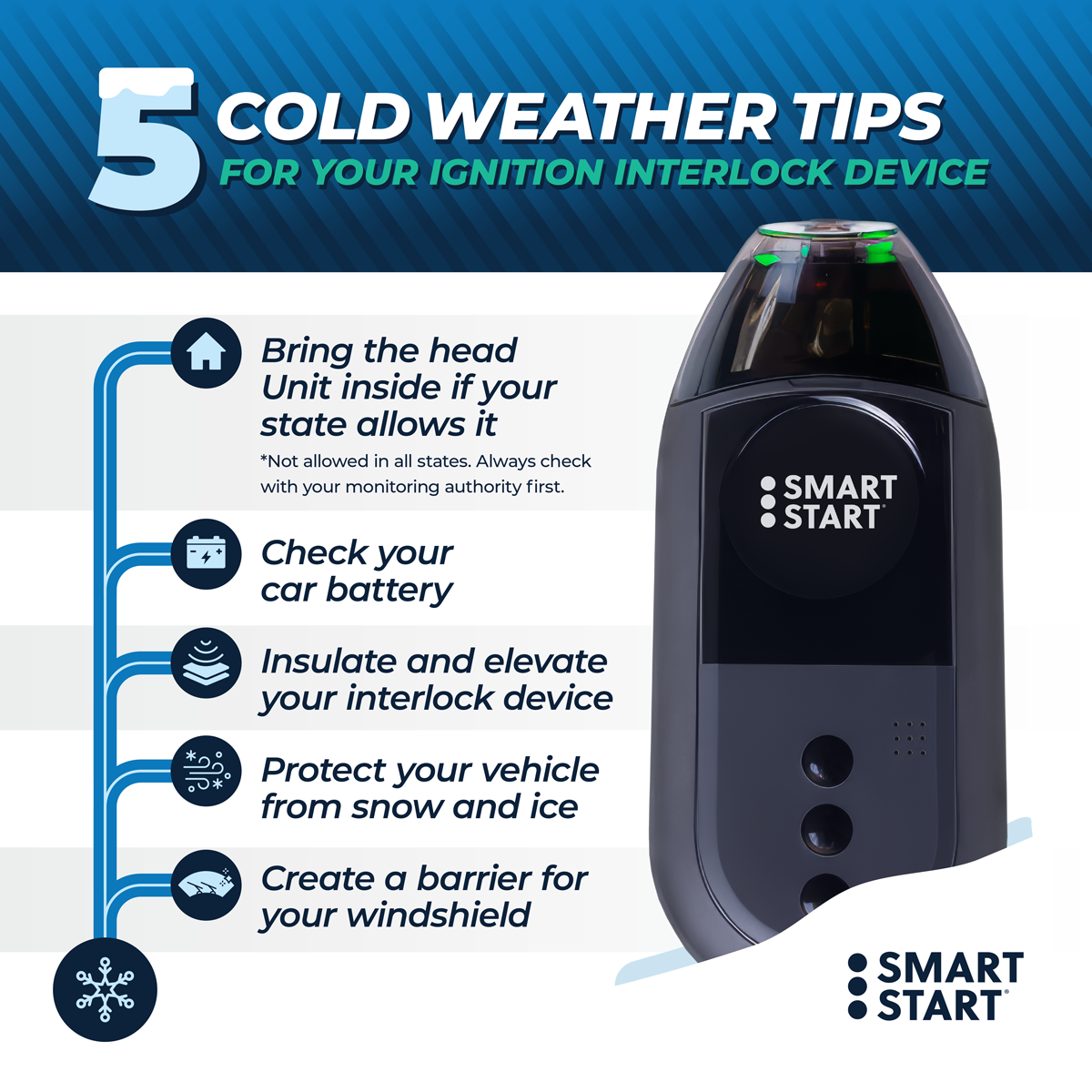
These tips for cold weather can help you protect your Interlock Device and minimize disruption to your day:
1. Check Your Car Battery Using Your Smart Start Interlock
First, check your car battery. If your battery is dead or has a weak charge, it may prevent your breath sample from registering effectively. Batteries often lose charge in cold weather, so if you’re struggling to use your Interlock Device in cold weather, the battery is an important factor to check.
You can check your battery voltage using the keypad on your Smart Start Ignition Interlock. Just press the # sign and the number 2 on your keypad. If your results are below 12 volts, you may have issues providing a test. Keep this in mind if your results are near or below 12 volts.
If your IID displays no message at all and appears completely inactive, your vehicle battery might be dead. Need to jump-start or charge your battery with an Ignition Interlock? Here’s how to do it.
2. Bring the Head Unit Inside When Your State Allows It
In many states, you’re allowed to disconnect the head unit of your Interlock Device. Always check with your monitoring authority before disconnecting your device. This allows you to bring the head unit inside when you anticipate cold weather in the morning. If you need to avoid waiting for your IID to warm up on a cold morning, bringing it inside (if you’re allowed to do so) is often the easiest and most reliable solution. Remember, you must turn off your vehicle before you disconnect the head unit.
Important: Check with your monitoring authority before disconnecting your device. In some states, including Wisconsin and New York, you are prohibited from disconnecting the head unit of your Interlock Device, and doing so may result in a violation. If you are unsure if your state allows you to disconnect the head unit of your device, be sure to check with your monitoring authority or our Customer Care team.
3. Insulate and Elevate Your Interlock Device
If you’re not allowed to disconnect your head unit, or would rather leave it in the car, you can also store your device in ways that help keep it warm. Try wrapping the unit in something that fits snugly, such as a mitten, a pair of winter socks, or a warm hat.
Make sure your device is not resting on the floorboard of your vehicle, where it can be more vulnerable to cold and moisture. Instead, put it in a cup holder, passenger seat, or the center console.
4. Protect Your Vehicle From Snow, Ice, and Extreme Cold
Parking your car away from wind and snow can help reduce the time your IID takes to heat up. Any type of covered parking, even unheated, will help protect your car and Interlock Device from cold weather-related damage.
5. Give Yourself Extra Time on Cold Mornings
Finally, try to give yourself a few extra minutes in the morning, in case your Interlock Device still requires a warm-up period. If you usually rely on your car’s remote start capability in cold weather, remember that you can’t use remote start while an Interlock Device is installed.
Troubleshooting Common Cold-Weather Ignition Interlock Problems
Here are a few more tips to help you operate your Interlock Device in cold conditions:
What Should I Do If My Ignition Interlock Says “Too Cold” or “Heating”?
Here’s what these messages mean:
- Too Cold: Your Interlock Device is below its required operating temperature.
- Heating: Your Interlock Device is currently heating up to its operating temperature. Wait three to five minutes for your IID to heat up, then try again.
If your IID is taking longer than five minutes to heat up contact our customer service experts to get help with your device.
What Should I Do If My Car Battery Died With an Interlock?
If your car battery died and your vehicle has a Smart Start Ignition Interlock Device, you can usually still charge your battery as normal with jumper cables or an auto battery charger. When you’re ready to start the vehicle, provide a breath sample and follow the startup procedure as you would normally.
Don’t attempt to remove or bypass the Ignition Interlock, as this could cause you to receive a violation. Need more help? Call our 24/7 customer support line.
Why Won’t My Ignition Interlock Turn On in Cold Weather?
It’s normal for an IID to take a few minutes to warm up in cold weather. Since car batteries can lose charge in cold weather, it’s also possible that your battery is too weak to operate the device. If your battery is fully charged, but your device won’t turn on, contact Smart Start’s customer support team for help.
What If My IID Still Isn’t Working After It Warms Up?
If your IID is consistently experiencing issues after a warm-up period, get in touch with our customer support team or with the Smart Start service center that installed your Interlock. We’ll help you get your issues resolved so you can get back on the road.
What Not to Do When Your Ignition Interlock Is Too Cold
It’s understandable to reach for a quick solution when your Interlock Device is too cold, but these methods do more harm than good:
Don’t Use Hair Dryers, Heaters, or Other Extreme Heat Sources
Directly heating your IID with devices such as a dryer or space heater is a bad idea that can damage the device’s internal components.
Don’t Disconnect the Device Unless You’re Allowed To
Remember, some jurisdictions completely prohibit disconnecting the Interlock Device from your vehicle. Double check the requirements of your program before you disconnect the head unit of your IID.
Don’t Try to Bypass the Device
Finally, don’t try to start the ignition without giving a breath sample, or otherwise bypassing the device. This can result in a tampering violation, or even in damage to your vehicle.
Cold-Weather Ignition Interlock FAQs
Can an Ignition Interlock Device Freeze?
Under normal conditions, an Interlock Device should not freeze. If the device is kept dry and protected from weather conditions, it should work normally again as soon as it warms up. However, if the device has gotten wet or otherwise been exposed to winter weather, contact your Smart Start service center right away, as the unit might be damaged.
Can I Leave My Ignition Interlock in the Car Overnight?
Yes, many drivers leave their Interlock Device in their vehicle overnight—but if you anticipate a cold morning, you may want to bring it inside to avoid a warm-up sequence. Always check with your monitoring authority before disconnecting your device. In some states, including Wisconsin and New York, you are prohibited from disconnecting the head unit of your Interlock Device, and doing so may result in a violation. If you need to leave your IID in your vehicle overnight, try wrapping it in something warm and snug, like a mitten or a winter hat.
Does Cold Weather Affect an Ignition Interlock Breath Test?
The temperature outside will not change anything about the process of giving a breath sample except how long the device takes to warm up.
Can I Warm Up My Car Before Taking My IID Test?
Usually, you cannot warm your vehicle up before you give a breath sample on your IID. You must give a passing breath sample to start the engine, and most vehicles require the engine to be running to heat the cabin.
What to Look for in an Ignition Interlock Device for Cold-Weather Performance
If you live somewhere that cold weather is a factor, it’s important to work with an Interlock Device provider that offers:
- Reliable Interlock Devices that withstand low temperatures
- Around-the-clock customer support
- Comprehensive guidance for using your Interlock Device
Ultimately, many drivers want to find steps they can take to avoid having to warm up their IID, whether it’s taking their unit inside at night or wrapping it in something warm. But to keep your life in motion and prevent unnecessary frustration, work with an IID provider that offers reliable devices and support from the beginning.
Ready to get moving with Smart Start? Find a Smart Start service center near you.
Get Help With Cold-Weather Ignition Interlock Problems
Still have questions about your Interlock Device when it’s cold out? Get in touch with our customer support team now for 24/7 assistance.

Schedule an Installation
Get a quick and easy IID installation with Smart Start! Get started today!
¡Obtenga una instalación rápida y fácil de IID con Smart Start! ¡Empieza hoy mismo!
"* (required)" indicates required fields
Disclaimer